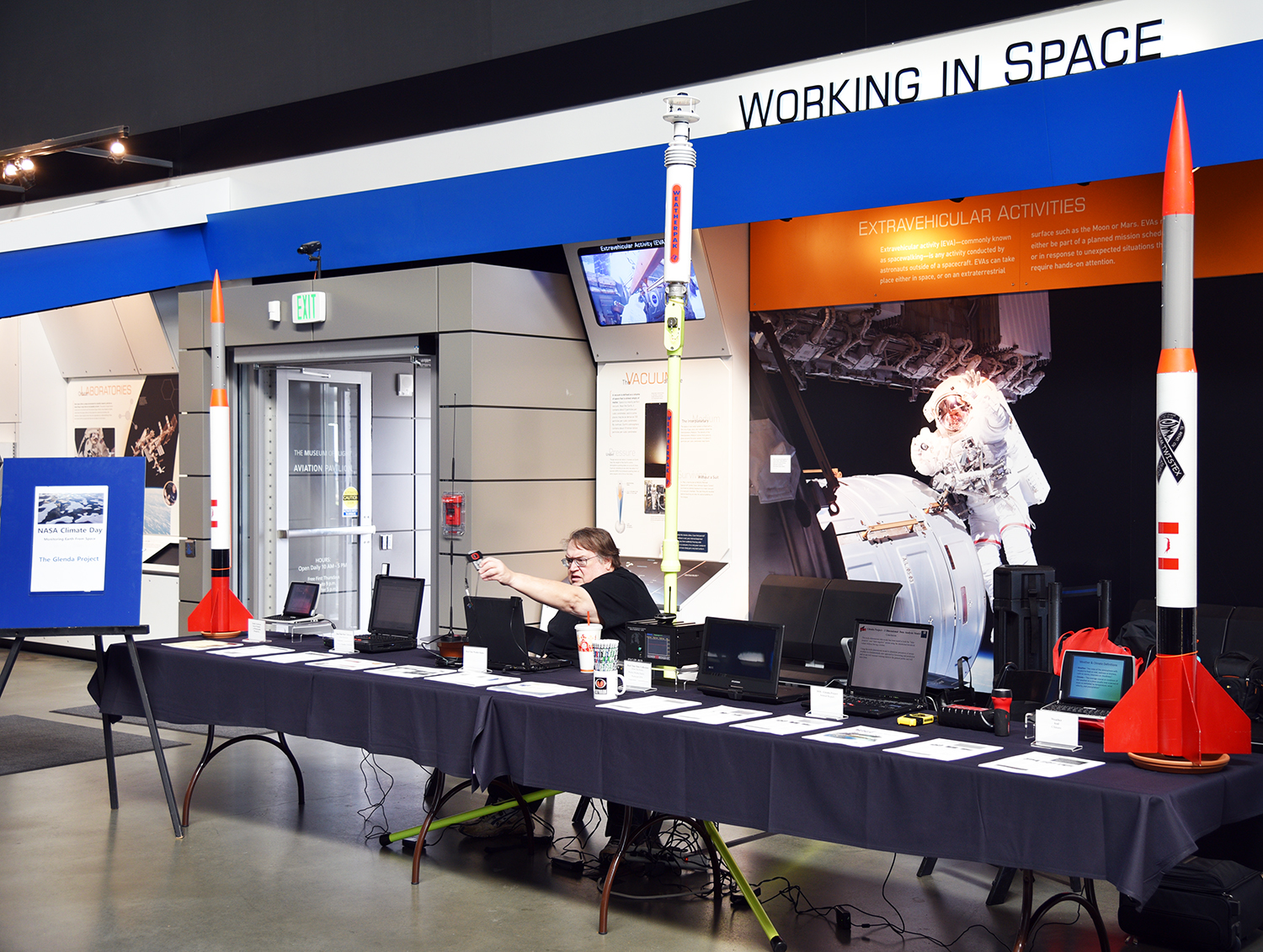
HOT NEWS: August 25, 2008 - SEPTEMBER IS LAUNCH MONTH! - The latest developments in rocketry design go off the pad this Sept with four launches at our Washington launch site: Five years of research and development have gone into building these birds. Real science comes from real data not just flights. Real data comes from planned flights with a purpose. Real data comes from real instrumentation. We have spent this lengthy period to build the next generation of research vehicles. For those flights by severe weather research teams in the field we pave the way with continuous improvements. For 12 years our Thunderocket Weather Rocket Series has led the way. Stay tuned as our next generation establishes the standard by which all others follow!


May 6, 2007 12:30AM:

100% SUCCESSFUL FLIGHT OF NEW RANGER INTERCEPT
VIDEO TRANSMISSION INTO STORM FRONT

WORLD 1st - The new Ranger Intercept research rocket has been successfully launched into a storm front and transmitted live full video and telemetry back to the chase team. This is the first time in history that full video transmission has been made from a rocket entering into the wall cloud of an approaching storm front. View some of the pics here. The full video is also located here (windows media format).

HOT NEWS Feb 28, 2007

PATENT ISSUED FOR - Multi Dimensional Data Models for Tornado Prediction

Patent number 60/903,881 - Multi Dimensional Data Models for Tornado Prediction, which reflects our unique work in atmospheric research and goals has been issued to the Glenda Project. Dave Davis has conducted unique research with the Glenda Project and Pullman Geosciences Inc which has led to the new patent.

Backed with a super computing cluster and multi mode communication links the Glenda Project is the world's only professional research organization of dynamic weather phenomena with advanced severe storm rocket launchable instrumentation payloads. A goal of the Glenda Project is to understand and develop weather processes to provide better storm warnings, and improved safety for people and property. The Glenda Project was founded in 1997.

glendaThe Glenda Project provides an infrastructure to advance the state of knowledge about the understanding of atmospheric processes and their relationships to geological structure to support discovery. The Glenda Project is dedicated to the research, development and flight of delivery systems of instrument packages used in arenas such as micro-climatology, micro-prospecting, severe storm data collection, and remote sensing.  The Glenda Project coordinates with Pullman Geosciences of Petal, Mississippi to utilize a comprehensive network of supercomputing cluster facilities for operations and research activities and to perform tasks with rapid response problem resolution. The Glenda Project crew believe that our avant-garde approach to exploring weather phenomena will provide new knowledge with understanding, and with time and analysis we truly believe that some influence or control of dynamic weather phenomena will take place providing long term improved safety for people and property.

The primary mission of the Glenda Project is to provide the capability to rapidly gather previously inaccessible localized microclimate data from altitudes ranging from ground level to 40,000 feet and to return this data for immediate use. The Glenda Project is a reusable sounding rocket delivery system research and development program designed to place instrument packages into areas previously considered to be to hazardous or inaccessible using traditional platforms such as balloons, aircraft, helicopters, kites, etc.

The Glenda Project rockets have the capability to collect temperature, humidity, barometric pressure, wind speed and other types of environmental data from ground level to 40,000 feet. The rockets are designed to be launched into thunderstorms, tornados, and other volatile weather environments and to return intact with the collected data.